The Kızılırmak Delta Bird Paradise, listed on UNESCO's World Heritage Tentative List, is facing the threat of drought due to prolonged lack of rainfall and extreme heat. Prof. Dr. Cevdet Yılmaz, Head of the Turkish and Social Sciences Department and Lecturer in the Department of Geography Education at Ondokuz Mayıs University (OMU), stated, "Turkey is experiencing a dry season. If the Kızılırmak Delta does not receive rain soon, the natural environment that forms the ecosystem, including aquatic plants and other wildlife, will be at risk, affecting all those directly or indirectly connected to the delta."
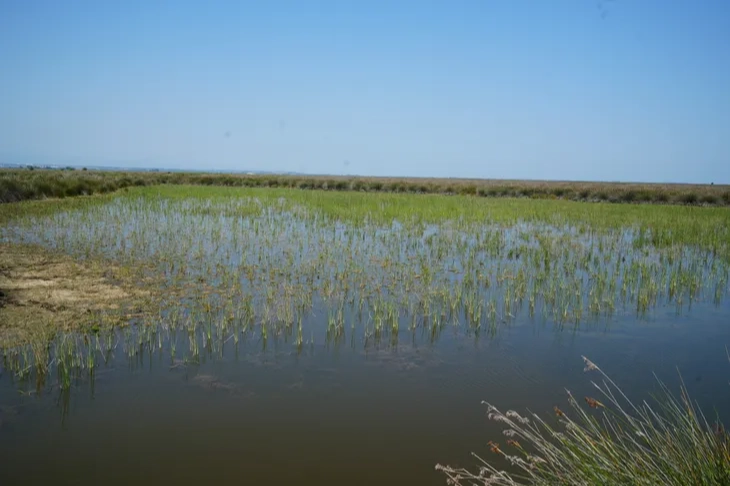
The Kızılırmak Delta Bird Paradise, one of Turkey's most significant wetlands located within the borders of the 19 Mayıs and Bafra districts of Samsun, has reached a dangerous level of drought. Aerial images reveal cracked soils and decreasing water levels in parts of the delta.
Prof. Dr. Cevdet Yılmaz, Head of the Turkish and Social Sciences Department and Lecturer in the Department of Geography Education at Ondokuz Mayıs University (OMU), emphasized that wetlands are among the most affected areas by the intensifying heat in Turkey. He said, "Turkey is experiencing a dry and hot season. We can see this more clearly with the increasingly frequent forest fires. Wetlands are another important area affected by the heat. The drought in wetlands is one of the most crucial warning points for us. By closely observing wetlands, we can better understand the current and potential impacts of drought on wildlife. In the past, wetlands were not considered very important. At one point, the State Hydraulic Works (DSI) even tried to convert some of them into agricultural land, a mistake that was later corrected. Nowadays, many institutions, including the DSI, support the conservation and maintenance of wetlands. The importance of wetlands is now better understood worldwide, including in our country. Our world is rapidly changing due to human intervention. Air, water, and soil are not in their original state. Wetlands, with their unaltered ecosystems, provide us with clues about how life can be sustained on Earth. The same wetlands also show us how ecosystems deteriorate with human intervention. The Kızılırmak Delta wetland is one of the ecosystems rapidly deteriorating due to human activity, and efforts are being made to halt this degradation through protection measures. It is a highly significant area for our country and Samsun. This wetland is not isolated from its surroundings. It is an area where agriculture, livestock, and fishing coexist, featuring reed beds, bird breeding and sheltering environments, wild horses, buffalo farming, and more, all of which interact with and affect tourism activities. In this area, in addition to drought and insufficient rainfall, factors such as the inability of lakes to be sufficiently fed by rivers and the evaporation of existing water from lake surfaces not only damage the wetland but also affect the sustainability of other related activities. Therefore, water resources in the delta area are crucial for the continuity of the wetland."
"Turkey's drought impact is closely observed in the Kızılırmak Delta" Prof. Dr. Yılmaz pointed out that the aquatic plants in the delta are at risk of disappearing when water levels drop, stating, "People expect significant economic returns from buffalo farming. Mozzarella cheese is obtained from buffalo milk. In addition to the famous Bafra pide offered as a gift from Samsun to Turkey and the world, Bafra delight made from buffalo cream is also related to the presence of buffalo in the delta area. Buffalo need wetlands to survive. The withdrawal of water from wetlands affects not only the buffalo but also many species, including resident and migratory birds. In this sense, we see and understand the impact of Turkey's drought on Samsun and the delta closely. We believe it is essential to monitor this process closely. By observing this process well, we can identify the potential impacts of drought in our country and take necessary measures accordingly. The current appearance of the Kızılırmak Delta provides important clues about the consequences of drought. Even a 10-centimeter drop in water levels in the lakes of the delta can leave large areas dry and create deep cracks in lake beds due to the nearly zero slope of the area. Thus, the drought in the delta area threatens the surface vegetation and bird habitats. We know that birds crossing the Black Sea stop here after seeing this wetland. The reduction in water surfaces will decrease the interest of migratory birds in this
area. However, we refer to this delta as the 'Bird Paradise.' We hope the drought is temporary and that early autumn rains will restore our lakes to their previous levels without causing permanent damage, encouraging migratory birds to continue stopping here. Currently, we need to monitor the process of water source reduction, lake withdrawal, and the formation of thick cracks in dry surfaces closely. We must focus on scientific studies to determine what actions to take if the drought continues and keep a close watch on the area. Our observations today hold clues for the future."
"If drought continues to increase year by year, wetlands like the delta will have no chance of survival" Prof. Dr. Yılmaz also said, "If the delta does not receive rainfall and is not supplemented by other sources, many negative outcomes will occur. For instance, aquatic plants will dry up, fishing will decrease, reeds will not develop, and the nesting and breeding environments of birds will disappear, putting the existence of the delta's wildlife at risk. We hope the drought will be short-lived. Short-term droughts are not very significant. The people of Anatolia have adapted to dry years with the fallow system they have used for thousands of years. However, if the drought persists, no method will suffice. The same applies to the delta. A short drought period of maybe two to three months may not have a lasting impact. However, if global warming continues to increase and extend the duration of heat and drought felt worldwide, it is inevitable that the delta will be affected. In such a scenario, can we transfer water from the Kızılırmak to the delta? Can we connect drainage channels to wetlands? What measures should we take to prevent agricultural chemicals from harming the delta during this process? When sea levels rise due to global warming, the delta surfaces will be most affected. What can we do to keep saline waters away from here when sea water invades while terrestrial water decreases? Many questions like these concern the future of deltas. We must continue our observations without interruption from today to tomorrow, focusing on the likely impacts of the current drought and ensuring we have the necessary knowledge and equipment to intervene when required. Only in this way can we ensure our cherished delta makes it onto the UNESCO World Heritage List and reaches future generations."
4o